Updated: October 12, 2026
The person who safeguards your footage before it gets to the editor.
Most people booking a Miami shoot can identify the roles they see working: the director, the camera operator, the sound recordist, and the producer who keeps everything together. The digital imaging technician is less visible, as their work occurs at a folding table off to one side, in front of a laptop and a stack of drives.
It is also the role where cutting the budget produces the worst outcomes, because the failures are not immediately visible. A photo shoot without proper data handling looks exactly the same as one with it, right up until someone discovers a memory card was reformatted before it was backed up. This guide explains what the role entails, when it is needed, and what happens when nobody is fulfilling it.
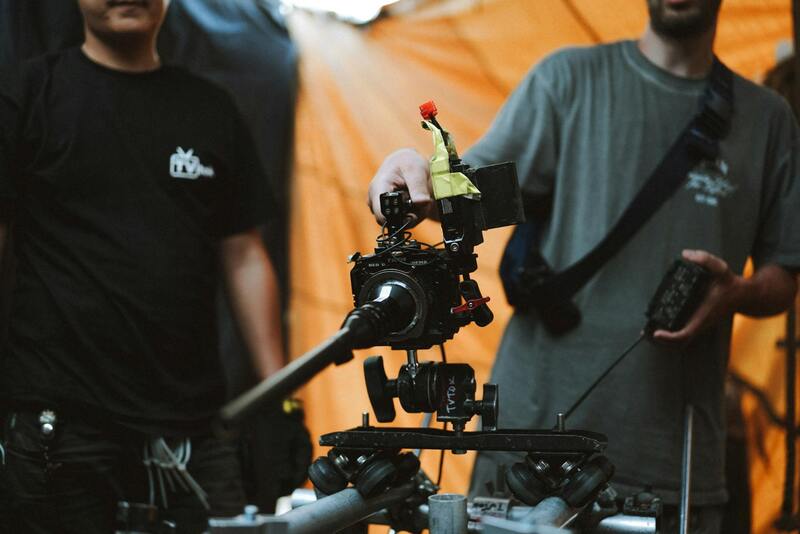
What the role actually covers
The title covers a range of tasks. On a smaller shoot, the work primarily involves data management. However, on a larger scale, it expands to include image control and monitoring.
Data management: the non-negotiable component
- Offloading cards from camera to storage as they fill, rather than at the end of the day
- Verified copying, which checks that every file arrived intact rather than assuming a drag and drop worked
- Redundant copies, at minimum two, ideally on separate physical devices kept in separate places
- Organised folder structure by day, camera, card and scene, so nothing has to be reconstructed later
- Reporting on what was shot, card by card, and what has been confirmed backed up
- Controlled card release, so no card is reformatted until its backups are verified
That last point is the single most important thing on this list. In a well-run set, the rule is that a card is only cleared for reuse by the person responsible for backups, never by whoever urgently needs an empty card.
Image control: the larger-shoot part
On larger productions, the role involves monitoring exposure and color, applying viewing profiles so the client sees a look close to the intended result rather than flat log footage, and preparing files for the edit. This is where the title truly signifies a technician rather than a data handler.
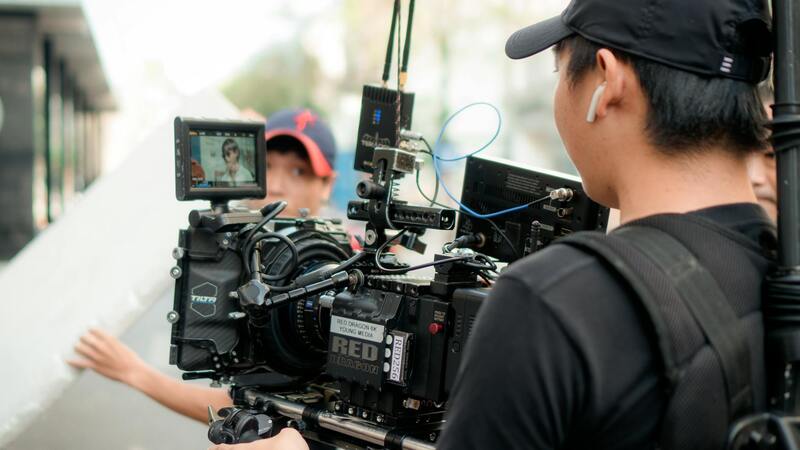
When you need one
Not every shoot requires it. A useful way to decide is:
- Single camera, half a day, straightforward content: the camera operator can usually handle offloads. Make sure someone is explicitly responsible.
- Multi-camera, full day: yes. Cards fill at different rates and someone needs to be tracking them while the shoot continues.
- Multi-day shoots: yes. The volume accumulates and the risk compounds across days.
- Anything unrepeatable: absolutely. A live event, a one-time location, a client executive who was difficult to schedule. There is no second chance to capture it.
- High-resolution or high-frame-rate work: yes, because the data volumes are large enough that offloading becomes a timed activity in its own right.
- Client attending and wanting to see the look: yes, since monitoring is part of the job.
The unrepeatable category deserves the most weight. On a corporate video you can, at real cost, shoot again. At a wedding, a conference keynote or a product launch, you cannot. How crew size scales with these factors is covered in the guide to video production crew size in Miami.
What goes wrong when nobody owns it
The failures are consistent and almost all preventable.
- A card is reformatted before backup. The most common and the most damaging. It happens when someone needs an empty card mid-shoot and grabs the nearest one.
- A copy that was never verified. The folder looks correct, the file sizes look plausible, and a file is corrupt. Discovered in the edit, a week later.
- One copy only. The drive is dropped, lost or fails. Drives do fail, and they fail more often than people plan for.
- Both copies travelling in the same bag. Two copies in one vehicle is one copy as far as risk is concerned.
- Nothing is labelled. Footage exists but nobody knows which day, camera or take, so the editor spends hours sorting.
- Offloading left to the end of the day. Everyone is tired, it takes two hours, and it gets rushed.
Each of these failures is a process issue rather than a technical one. This is precisely why assigning responsibility is more critical than the equipment itself.
Miami-specific considerations
Heat and humidity can affect the performance of laptops and drives. An outdoor station exposed to direct sunlight may experience throttling or shutdown. To prevent such issues, the station needs to be shaded with adequate ventilation, and air conditioning would be ideal. Power supply at outdoor locations can often be improvised, so having a battery backup for the laptop and drives is advisable. A power interruption during a verified copy process would require restarting that copy, which can be time-consuming.
What to ask when booking
If you are hiring for this role, these questions can quickly establish the candidate's competence.
- What copy verification method do you use, and how do you confirm that it has passed?
- How many copies are made, and where do they physically go at the end of the day?
- What report do you receive at the end of each shoot day?
- Who is authorized to clear a card for reformatting?
- Do you provide your own drives, and are they included in the package or charged separately?
- What is the handover format for the editor?
The drive question matters commercially, since storage is frequently a separate line item and the rates vary. How that fits into overall crew costs is covered in the article on gaffers, grips and the below-the-line crew, and the rate conventions in the piece on getting paid as freelance crew.
If you are the one hiring, make this decision early.
Data handling should be part of the initial budget discussion, along with camera and crew. Incorporating it later often results in either hastily finding a suitable person or quietly omitting the role, hoping it goes unnoticed. Given that the cost of the data handler's role on a shoot day is relatively small compared to the potential loss of a day's footage, it is one of the few budget line items where the downside is entirely catastrophic rather than partially detrimental.
Crewing your Miami shoot
We include data handling as a standard feature for every multi-camera and multi-day booking, rather than offering it as an option. We clearly specify on the call sheet who owns the responsibility for card clearance. You receive a daily report that outlines what was shot and what has been verified and backed up, before anyone leaves the location.
For single-camera half-day work, we will honestly inform you if the role is no longer needed. We will also specify who is covering the offloads instead. What we will not do is leave it unassigned.
Tell us the shoot scale, the number of cameras and whether the content is repeatable, and we will scope the crew accordingly. More on roles and hiring in the production blog, or get in touch through the contact page.
The short version
The role encompasses verified offloading, redundant backups, structured organization, daily reporting, and controlled card clearance. For larger shoots, it also involves monitoring and image control. This position is ideal for multi-camera, multi-day, high-resolution, or unrepeatable work.
If the budget does not cover the role, at least assign the responsibility to a named person and include it on the call sheet. Without an owner, these tasks often quietly go uncompleted.