Updated: September 21, 2026
The people with job titles that nobody explains.
Reading a crew list for a Miami shoot, the top of the list makes sense: director, producer, and DP (director of photography). However, the list then becomes more obscure: gaffer, key grip, best boy, and swing. These titles are not whimsical; they describe a division of labor that is over a century old and remains the most efficient way to light and move a camera.
When booking a crew, you are paying for specific roles. Understanding what each role entails helps you differentiate between a reasonable quote and an inflated one. For those aiming to work in this industry, knowing these roles provides a roadmap to finding job opportunities.
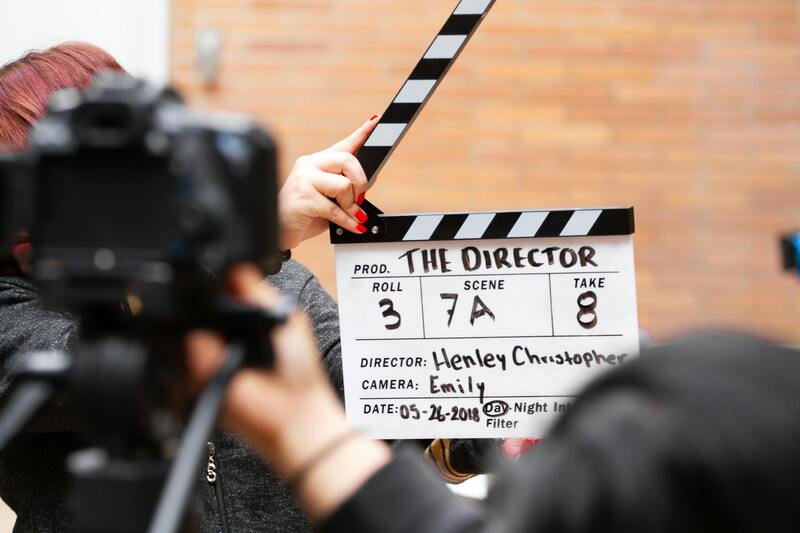
The line that splits a crew
The phrase "below the line" originates from budget layout. "Above the line" typically refers to the creative leadership hired for their judgement: the director, producer, writer, and principal cast. Conversely, "below the line" encompasses everyone who executes the technical aspects of production: the camera, lighting, grip, sound, and art departments.
The distinction is about how the money behaves rather than importance. Above-the-line costs are negotiated per project. Below-the-line costs are calculated from day rates and crew size, which makes them the part of a budget you can actually estimate. Our note on crew size for Miami shoots covers how those numbers stack up.
Lighting: the gaffer's department
The director of photography (DP) decides how a scene should look, while the gaffer is responsible for making that vision a reality. As the chief lighting technician, the gaffer translates the DP's intentions into specific lighting fixtures placed in precise locations, and adjusted to the exact intensity needed.
When a director of photography (DP) wants the room to feel like late afternoon with a hard edge from the window, the gaffer is the person who knows which light to use, where it should be placed, what it will highlight, and whether the building's power supply can accommodate it. This last consideration is more significant than many people anticipate, especially in Miami, where older buildings and modern lighting equipment can sometimes be incompatible.
Best boy electric
The gaffer's second-in-command. This title has historical roots and is unrelated to age or gender. This individual oversees the department's logistics, ensuring that everyone knows their tasks, the equipment on the truck is accounted for, and that all necessary items are still required. Additionally, this person is responsible for identifying the power source. The gaffer collaborates with the director of photography (DP), while the best boy ensures the department functions smoothly during these discussions.
Electricians
Often simply referred to as electrics or sparks, these professionals handle a variety of tasks. They rig equipment, run cables, place fixtures, and manage power distribution.
Grip involves everything that the light passes through and everything the camera is mounted on.
This department often confuses clients because the split appears arbitrary until it is seen in action.
Electrics provide light, grips shape and block it, and grips also move the camera. When a light is switched on, that is an electric component. If a flag cuts that light off a wall, that is a grip operation. If the camera moves on a dolly or hangs off a rig, that too is a grip function.
The key grip manages the department, working closely with the director of photography (DP) and the gaffer. They handle the negative side of lighting, which involves the use of flags, nets, silks, and bounces to control where light does not go. Much of what makes an image look intentional is the subtraction rather than the addition of light, and this subtraction is the work of the grip department.
Dolly grip
A specialist operates the dolly. A skilled one matches the move to the actor's pace, hitting the mark at the right moment, and starting and stopping without a visible bump. It may look like pushing a cart, but it is far from it.
Swing
Someone who works across both grip and electric departments. On smaller Miami crews, this is a common and sensible hire. This is because one person can cover the overflow from both departments, rather than having two people potentially standing around.
| Role | Department | Answers to | Owns |
|---|---|---|---|
| Gaffer | Electric | DP | Lighting design and power |
| Best boy electric | Electric | Gaffer | Department logistics |
| Key grip | Grip | DP | Shaping light, camera support |
| Best boy grip | Grip | Key grip | Department logistics |
| Dolly grip | Grip | Key grip | Camera movement |
| Swing | Both | Both keys | Whatever is needed |
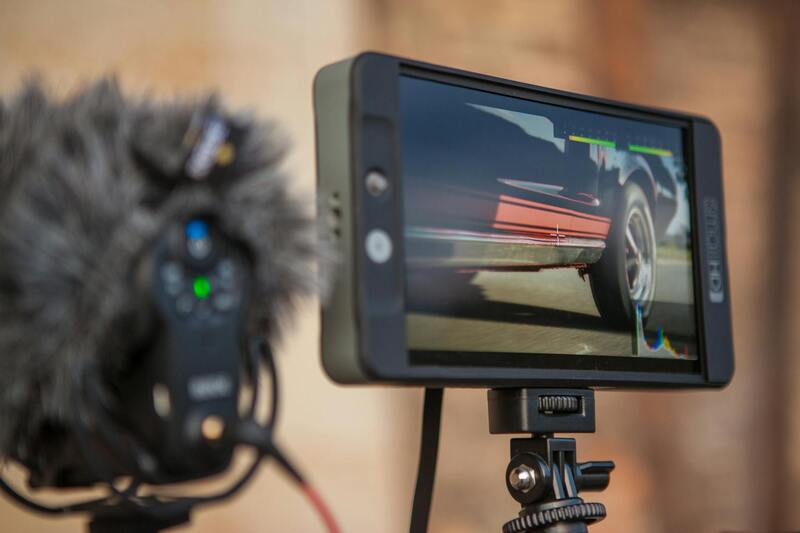
Sound, and why it is not optional
The sound department is small, and it's often the first to be cut, which is consistently a mistake. Audiences can forgive a slightly soft image, but they switch off due to bad audio within seconds.
The production sound mixer is responsible for selecting the appropriate microphones, setting levels, and ensuring the recording is of high quality. The boom operator holds the microphone in the optimal position, ensuring it captures clear sound while remaining outside the camera frame and out of the light. The operator must move smoothly with the action for extended periods.
Miami presents specific challenges. Air conditioning contributes to a constant hum in nearly every interior space. Traffic, boats, aircraft, and afternoon storms are ambient realities. Coastal winds hit microphones forcefully. This is precisely why a location that photographs beautifully can pose significant sound problems, and why a scout should focus on both listening and looking.
Why the structure exists
A reasonable question from anyone paying for it: why are there so many people?
Because the alternative is slower and more expensive. A department with a clearly defined leader and a second-in-command can implement changes efficiently. While the department head and director are planning the next setup, the department can execute the current changes seamlessly. Everyone knows who they report to, so decisions travel in one direction rather than becoming a group discussion. Three individuals who each know their role will out-produce five who are still figuring it out.
There is also a safety argument. Jobs like electrical distribution, rigging weights overhead, and lifting heavy fixtures require professionalism. The difference isn't just about getting the shot right; it's about ensuring that no one gets hurt.
Scaling for the job in front of you
Not every Miami photo shoot requires a full crew, and pretending otherwise is how quotes turn into fiction.
- A talking-head interview might require a DP who gaffs their own small package.
- A single-location brand piece typically involves working with a gaffer and one swing set.
- Anything involving camera movement requires a professional grip, not just a borrowed pair of hands.
- Anything involving dialogue requires a dedicated sound mixer.
- For multi-location days, there need to be enough people to strike and rig in parallel.
That last point is the one that gets underestimated. Two locations in a day is not one shoot done twice. It is a shoot plus a strike plus a move plus a rig, and the crew size is what determines whether the second location happens before the light goes. Our guide to crew roles for anyone booking a shoot covers the full picture.
Ask what each line is for
When a quote arrives with a crew list attached, the key question to ask is what each role entails for your specific day. A production that can answer this has carefully thought about your shoot. Conversely, one that cannot answer this is likely quoting from a standard template.
We would rather explain why a swing is on the list than have you remove it and find out on the day that a lighting change takes forty minutes instead of ten. Similarly, if your project genuinely does not require a dolly grip, that line should not be included, and we will indicate as much.
You can see how we build teams on our about page, and our note on day rates in Miami covers what these roles cost. Bring us your shoot through the contact page and ask what the crew list is actually doing.